
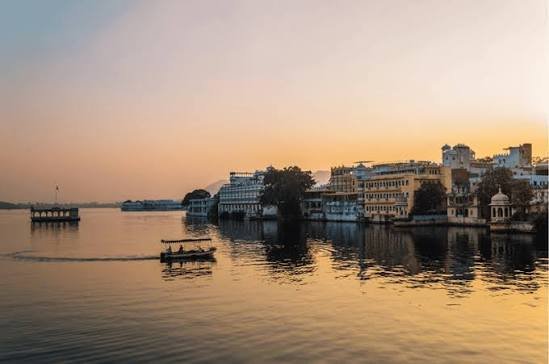
Ambrai Ghat is one of the most scenic places to experience Lake Pichola and Udaipur’s palace-lined waterfront from ground level. Located in the old city on the opposite side of the lake from the City Palace, the ghat offers wide views of the palace complex, Jag Mandir, Lake Palace and the surrounding Aravalli landscape. It is especially popular around sunset, when the palaces begin to light up and their reflections become visible across the water.
Also known as Manjhi Ghat or Hanuman Ghat, Ambrai is less about touring a monument and more about enjoying Udaipur’s lakeside atmosphere. Visitors come to sit on the steps, take photographs, watch boats crossing Lake Pichola or simply spend some quiet time away from the busier streets of the old city. There is no general entry fee, making it an easy addition to an Udaipur sightseeing itinerary.
Ambrai Ghat Quick Information
| Information | Details |
|---|---|
| Name | Ambrai Ghat |
| Also Known As | Manjhi Ghat / Hanuman Ghat |
| Location | Chandpole side of Lake Pichola, Udaipur, Rajasthan |
| Address | Chandpole Maji Ka Mandir area, Pichola, Udaipur, Rajasthan 313004 |
| Known For | Lake Pichola views, sunset, City Palace views and photography |
| Entry Fee | No general entry fee |
| Listed Timings | Common current listings show approximately 5:00 AM–7:00 PM; local information varies |
| Best Time to Visit | Early morning or one hour before sunset |
| Ideal Visit Duration | 45 minutes to 1.5 hours |
| Nearest Railway Station | Udaipur City Railway Station |
| Nearest Airport | Maharana Pratap Airport |
| Best Season | October to March |
History of Ambrai Ghat
Ambrai Ghat has traditionally been known as Manjhi Ghat, while Hanuman Ghat is another name associated with the location. Unlike the City Palace, Jag Mandir or other major royal monuments of Udaipur, detailed historical records establishing a precise construction date for the ghat are limited.
Historically, ghats around Lake Pichola served practical as well as social purposes. Local residents used them to approach the water for bathing, washing, religious activities, boat access and everyday community life.
Ambrai gradually evolved from such a functional waterfront into one of Udaipur’s best-known recreational spaces. The ghat is maintained as a public lakeside area, with stone and marble boundaries and seating where people can spend time beside the lake.
Its popularity among tourists has grown considerably because of its position directly across the water from some of Udaipur’s most recognisable architecture. Today, the panoramic palace view rather than a particular monument on the ghat itself is the primary reason most travellers visit.
Where Is Ambrai Ghat Located?
Ambrai Ghat is located in the Chandpole side of Udaipur’s old city, directly beside Lake Pichola.
It sits across the lake from the City Palace and opposite the wider Gangaur Ghat side. From the waterfront, visitors can see several famous Udaipur landmarks, including the City Palace, Lake Palace and Jag Mandir.
The old-city setting is an important part of the experience. Reaching the ghat involves passing through relatively narrow streets lined with guesthouses, homes, small businesses and restaurants.
Parking immediately around the ghat can be difficult, particularly in the evening, so walking or using an auto-rickshaw is often more practical than taking a large private vehicle.
Directions to Ambrai Ghat
From Udaipur City Railway Station
Ambrai Ghat is roughly 4–5 km from Udaipur City Railway Station, depending on the road and final access point.
Auto-rickshaws and taxis are convenient options. Ask the driver for Ambrai Ghat, Manjhi Ghat or the Chandpole side of Lake Pichola if necessary.
Traffic inside the old city can make the journey slower than the distance suggests.
From Maharana Pratap Airport
Maharana Pratap Airport is approximately 24–25 km from Ambrai Ghat.
A taxi or app-based cab is the most straightforward option from the airport. The drive normally takes around 45–60 minutes depending on traffic.
Because streets become narrow close to the old city waterfront, your driver may recommend a nearby drop-off point from which you can walk.
From City Palace and Jagdish Temple
Ambrai Ghat looks extremely close to the City Palace on a map because the two face each other across Lake Pichola. However, visitors travelling by land must go around the lake-side streets rather than crossing directly over the water.
From the Jagdish Chowk and Bagore Ki Haveli area, Ambrai can be reached through the old-city road network and nearby pedestrian connections. Walking can be enjoyable if the weather is comfortable.
Ambrai Ghat Timings
Timings published for Ambrai Ghat are inconsistent across current visitor listings. Some recent map-based listings show approximately 5:00 AM to 7:00 PM, while other travel sources describe longer public access.
For practical trip planning, visitors should treat early morning through sunset as the most reliable sightseeing period and check locally if planning to visit after dark.
There is generally no admission charge for entering the public ghat.
Early morning is quiet and suitable for walking or photography. Evenings are significantly busier because sunset is the most popular time to visit.
What to Expect at Ambrai Ghat
Do not expect a large palace, museum or organised tourist complex. Ambrai is essentially a lakeside public ghat and viewpoint.
Its appeal comes from what lies across the water.
Visitors can expect:
- Panoramic views of Lake Pichola
- Excellent views of the City Palace
- Views toward Lake Palace and Jag Mandir
- Stone steps and lakeside seating
- Boats moving across the lake
- Local residents using the waterfront
- Photographers and couples around sunset
- Restaurants and cafés in the surrounding old-city lanes
The atmosphere can be peaceful during the morning but becomes much livelier in the late afternoon.
Sunset at Ambrai Ghat
Sunset is the main attraction for many visitors.
Ambrai’s position across Lake Pichola provides a particularly attractive perspective of the City Palace. As evening approaches, the changing light falls across the palace façade, while reflections appear on the lake when conditions are calm.
After sunset, illuminated buildings around Lake Pichola create another distinctive view.
If sunset is your priority, arrive 30–60 minutes beforehand. This provides time to choose a comfortable place before the waterfront becomes crowded.
Weekend evenings and the peak tourist season from October to March can be noticeably busier.
Photography at Ambrai Ghat
Ambrai Ghat is one of Udaipur’s popular photography locations because several major landmarks can be captured from one waterfront area.
The lower steps provide a good perspective for incorporating reflections into photographs, while standing farther back allows a broader view of the lake and palace skyline.
Early morning provides softer light and fewer people. Sunset offers warmer colours but much larger crowds.
Visitors should remember that the ghat remains a public space used by local residents. Avoid intrusive photography of people bathing, praying or carrying out personal activities without permission.
Best Time to Visit Ambrai Ghat
October to March is generally the most comfortable season. Temperatures are more suitable for walking around the old city and sitting outdoors beside the lake.
April to June can be very hot, making morning and evening preferable.
The monsoon gives Udaipur a greener appearance and can improve water levels in the city’s lakes, although rain may make stone surfaces slippery.
For the quietest experience, visit early in the morning. For photography and the classic palace view, choose the hour before sunset.
Places to Visit Near Ambrai Ghat
Ambrai Ghat fits easily into an old-city sightseeing plan.
City Palace is the most prominent landmark visible across the water and should be visited separately for its courtyards, architecture and museum collections.
Bagore Ki Haveli stands near Gangaur Ghat and is known for its heritage displays and cultural performances.
Jagdish Temple, one of Udaipur’s major historic temples, is also located in the old-city area.
Visitors can additionally explore Gangaur Ghat, Lake Pichola, Jag Mandir and the old-city markets while spending time around this part of Udaipur.
Practical Tips for Visitors
- Visit around an hour before sunset if evening views are your priority.
- Choose early morning if you prefer fewer people.
- Use an auto-rickshaw or walk when possible because old-city parking is limited.
- Wear comfortable footwear for narrow lanes and stone steps.
- Be careful near the water’s edge, particularly with children.
- Stone surfaces can become slippery during rain.
- Do not leave plastic bottles, food packaging or other waste at the ghat.
- Avoid disturbing local residents using the waterfront.
- Check locally for current access hours if planning a late-evening visit.
Frequently Asked Questions
Q1. Why is Ambrai Ghat famous?
Ambrai Ghat is famous for its panoramic views across Lake Pichola toward the City Palace, Lake Palace and Jag Mandir. It is particularly popular for sunset photography and relaxed evenings beside the lake.
Q2. Is Ambrai Ghat also called Manjhi Ghat?
Yes. Ambrai Ghat is widely associated with the name Manjhi Ghat and is also referred to as Hanuman Ghat. Visitors searching maps or asking local residents may encounter these different names.
Q3. What are the timings of Ambrai Ghat?
Current visitor listings do not agree on one universal schedule. Some map-based listings show approximately 5:00 AM to 7:00 PM, while other sources describe longer access. Early morning through sunset is the safest period to plan a visit, and late-evening access should be confirmed locally.
Q4. Is there an entry fee for Ambrai Ghat?
There is generally no entry fee to visit the public ghat. Food at nearby restaurants, transportation and other optional activities are charged separately.
Q5. What is the best time to visit Ambrai Ghat?
The hour before sunset is the most popular time because the City Palace and Lake Pichola look particularly attractive in the evening light. For fewer crowds and a quieter waterfront, visit early in the morning.