
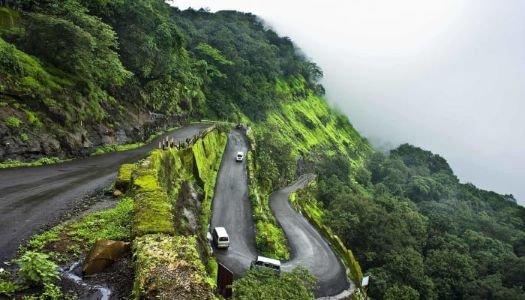
Malshej Ghat is one of Maharashtra’s most striking mountain passes, especially when the monsoon turns the Sahyadri hills deep green and seasonal waterfalls begin flowing beside the winding road. Located in the Western Ghats on the Kalyan–Ahilyanagar route, it is a popular road-trip destination for travellers from Mumbai, Thane, Kalyan and Pune. Unlike a riverfront ghat, Malshej is a mountain pass, so the journey through the valleys, cliffs, tunnels and viewpoints is a major part of the experience.
Nature is the main attraction here. During the rainy season, clouds can descend across the road, waterfalls appear along rocky slopes and visibility can change within minutes. Nearby attractions such as Harishchandragad and Pimpalgaon Joga Dam also make Malshej useful as a base for a longer Sahyadri trip. Maharashtra Tourism identifies July to September as the prime period for waterfalls and mist.
| Information | Details |
|---|---|
| Name | Malshej Ghat |
| Type | Mountain pass and scenic tourist destination |
| Location | Western Ghats, Maharashtra |
| Road | Kalyan–Ahilyanagar corridor / NH 61 |
| Known For | Waterfalls, mist, valleys, monsoon drives, trekking and birdlife |
| General Timings | Public road; no standard tourist opening or closing time |
| Recommended Visit Time | Daylight hours |
| Entry Fee | No general fee to travel through the ghat |
| Best Time for Waterfalls | July to September |
| Best Time for Trekking | October to February |
| Distance from Mumbai | Around 126–130 km |
| Distance from Pune | Around 118–120 km |
| Nearest Railway Station | Kalyan, approximately 85 km |
| Nearby Attractions | Harishchandragad, Pimpalgaon Joga Dam, Ajoba Hill and seasonal waterfalls |
History of Malshej Ghat
Malshej Ghat has historically served as an important passage through the rugged Western Ghats. Maharashtra Tourism notes that old trade routes through this region once helped connect the Deccan Plateau with coastal areas, allowing merchants and other travellers to cross the mountain range.
The region later became associated with the Maratha period. Its geography had strategic value, and Maharashtra Tourism connects the wider Malshej region with movements during the era of Chhatrapati Shivaji Maharaj.
Several historic forts in the surrounding Sahyadri landscape provide further evidence of the area’s strategic importance. The most prominent is Harishchandragad, an ancient hill fort containing caves, temples and fortifications.
Modern road development transformed Malshej into an important transport route, while tourism gradually made it one of Maharashtra’s best-known monsoon drives. Today, the ghat attracts nature lovers, bikers, photographers, trekkers and families looking for a weekend escape.
Where Is Malshej Ghat Located?
Malshej Ghat lies in the Western Ghats of Maharashtra, around the Pune–Thane–Ahilyanagar border region. Government sources describe it as being on the Kalyan–Nagar road, with the ghat forming an important route between the Konkan side and the Deccan interior.
The location is roughly 126 km from Mumbai and 118 km from Pune, according to the Thane district administration.
Malshej is not a single enclosed tourist attraction with one entrance. The name refers to the wider mountain-pass area, so viewpoints, waterfalls and stopping points are spread along the road.
Directions to Malshej Ghat
From Mumbai
The government-listed route from Mumbai is:
Mumbai → Thane → Kalyan → Murbad → Shivale → Saralgaon → Kasgaon → Tokawade → Malshej Ghat
The journey is approximately 126 km, although the exact distance depends on your starting point in Mumbai.
Private cars and taxis are convenient because they provide flexibility for safe stops along the route.
From Pune
The commonly listed Pune route is:
Pune → Chakan → Rajgurunagar → Peth → Manchar → Narayangaon → Junnar → Malshej Ghat
The distance is approximately 118 km. The route becomes increasingly scenic as travellers approach the Sahyadri hills.
From Kalyan Railway Station
Kalyan is the nearest major railway station, approximately 85 km from Malshej Ghat. Travellers arriving by train can continue by bus or taxi.
State transport services operate along the Kalyan–Ahilyanagar corridor, but travellers should check current schedules before depending on a particular service.
Malshej Ghat Timings
Malshej Ghat is a public mountain road, not a gated attraction, so it does not have a standard opening and closing time.
There is also no general entrance fee simply for travelling through the ghat.
For tourism, however, visiting during daylight hours is strongly recommended. Maharashtra Tourism specifically advises avoiding night driving in fog.
Starting early is particularly useful on monsoon weekends because traffic increases as the day progresses.
Individual attractions, trekking routes, parking areas and accommodation properties around Malshej may have their own timings and charges.
What to Expect at Malshej Ghat
The scenery depends heavily on the season.
During the monsoon, expect:
- Mist-covered mountain roads
- Numerous seasonal waterfalls
- Lush green valleys
- Low clouds and sudden fog
- Wet and slippery roads
- Busy viewpoints on weekends
- Roadside tea and snack stalls
- Dramatic Sahyadri landscapes
Visibility can deteriorate rapidly in heavy rain, so the same weather that makes Malshej beautiful can also make driving challenging.
Outside the monsoon, waterfalls may become much smaller or disappear entirely. However, clearer skies can provide better long-distance valley views and more comfortable conditions for trekking.
Waterfalls at Malshej Ghat
Seasonal waterfalls are among Malshej’s biggest attractions.
From roughly June through September, rainfall creates numerous cascades along the rocky cliffs. Some can be seen directly from the road, while others are farther inside the surrounding hills.
Visitors should not assume that every roadside waterfall is safe for bathing. Fast currents, slippery rocks and sudden increases in water flow can make seemingly harmless spots dangerous.
Stopping vehicles on curves or narrow road sections to reach a waterfall should also be avoided.
Best Time to Visit Malshej Ghat
For the classic monsoon experience, July to September is generally the best period. Maharashtra Tourism specifically recommends these months for waterfalls and mist.
If your priority is trekking and sightseeing rather than rain, October to February provides cooler and generally clearer conditions.
Summer from March to May is comparatively dry. The landscape can still be attractive, particularly in the morning and evening, but visitors should not expect the extensive waterfalls seen in monsoon photographs.
Places to Visit Near Malshej Ghat
Harishchandragad is one of the best-known nearby attractions and is particularly popular among trekkers. Its ancient caves, temples and dramatic Konkan Kada make it a destination in its own right.
Pimpalgaon Joga Dam, built on the Pushpavati River, offers reservoir and mountain scenery and is known for birdwatching.
Ajoba Hill is another trekking destination in the wider region, while several seasonal waterfalls appear around the ghat during periods of strong rainfall.
These places should be planned separately because trekking routes and individual attractions can have different access conditions.
Monsoon Safety at Malshej Ghat
Extra caution is essential during heavy rain. Maharashtra Tourism specifically warns about landslides and aquaplaning and recommends stopping only at safe pullouts.
Road access can also be temporarily interrupted. For example, heavy rain and road subsidence caused a closure of the Malshej Ghat section in July 2026. Conditions can change afterward, so this should not be treated as a permanent closure, but it demonstrates why checking current road advisories before a monsoon trip is important.
Drivers should reduce speed on bends, maintain extra distance from other vehicles and avoid unnecessary overtaking.
Practical Tips for Visitors
- Start early to avoid heavy weekend traffic.
- Check weather and road conditions before a monsoon trip.
- Carry a raincoat and waterproof protection for electronics.
- Drive slowly when fog reduces visibility.
- Park only at designated or clearly safe stopping areas.
- Do not enter waterfalls or streams with strong currents.
- Wear shoes with good grip if walking near wet viewpoints.
- Carry water and some snacks because facilities can be limited in remote sections.
- Keep the Western Ghats clean and take plastic waste back with you.
- Avoid night driving during heavy rain or dense fog.
Frequently Asked Questions
Q1. Why is Malshej Ghat famous?
Malshej Ghat is famous for its Western Ghats scenery, monsoon waterfalls, mist-covered valleys, winding mountain roads, trekking opportunities and birdlife. It is particularly popular as a road-trip destination from Mumbai and Pune.
Q2. What is the best time to visit Malshej Ghat?
July to September is ideal for travellers who want to see waterfalls, mist and lush monsoon greenery. October to February is more suitable for trekking, sightseeing and visitors who prefer clearer weather.
Q3. Is there an entry fee for Malshej Ghat?
No general entry fee is charged simply for travelling through Malshej Ghat because it is a public road and mountain-pass area. Individual attractions, parking areas, accommodation or organised activities may have separate charges.
Q4. How far is Malshej Ghat from Mumbai and Pune?
According to the Thane district administration, Malshej Ghat is approximately 126 km from Mumbai and 118 km from Pune. Actual driving distance can vary according to your starting point and chosen route.
Q5. Is Malshej Ghat safe during the monsoon?
It can be visited during the monsoon, but heavy rain brings risks including dense fog, slippery roads, falling rocks, landslides and reduced visibility. Temporary road restrictions are also possible. Check current weather and traffic advisories before leaving, travel during daylight and avoid unsafe roadside stops.